

On the morning of July 9, the Green Industry Forum 2025, organized by Vietnam Economic Times (VnEconomy), took place in Hanoi, welcoming over 100 representatives from enterprises, representatives from Government, and media outlets.
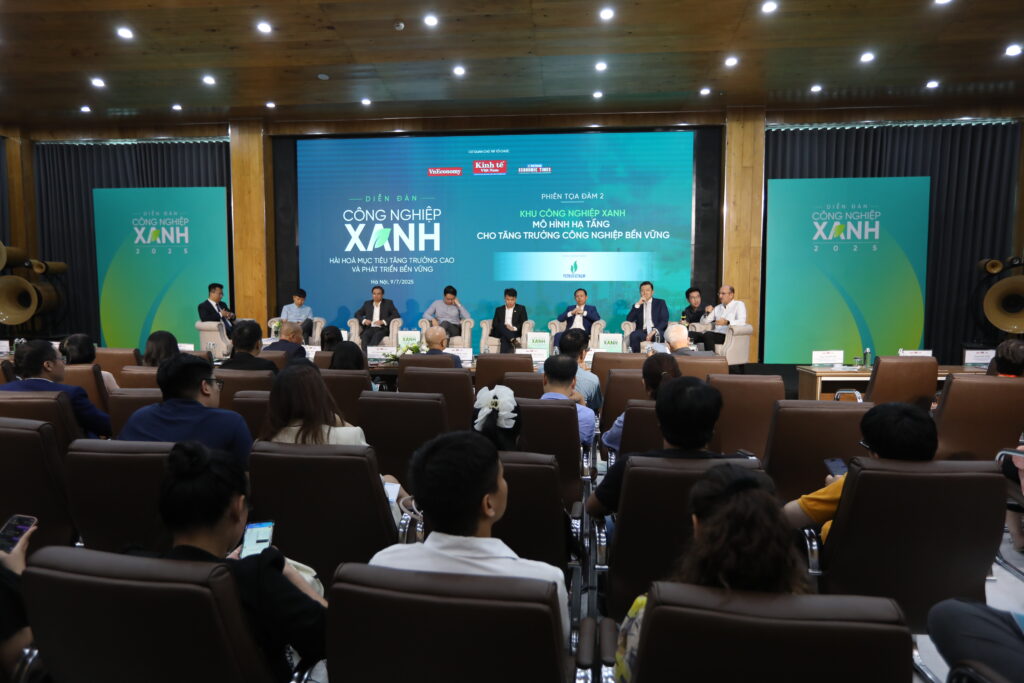
Against the backdrop of Vietnam’s dual goals of becoming a high-income country by 2045 and achieving Net Zero by 2050, green industrial development has emerged as a decisive and pivotal factor.
At the thematic discussion on optimal infrastructure models for sustainable industrial growth, experts outlined global and domestic green transition trends while emphasizing the pioneering role of next-generation industrial parks in greening both industry and the broader economy.
Representing AMATA Vietnam – one of the leading industrial park developers with 30 years of operation in Vietnam – Mr. Pham Anh Tuan, Senior Manager of Water and Environmental Management, shared insightful perspectives on the importance of sustainable development and the circular economy. “Sustainable development and the circular economy bring significant economic and environmental benefits,” Mr. Tuan affirmed.
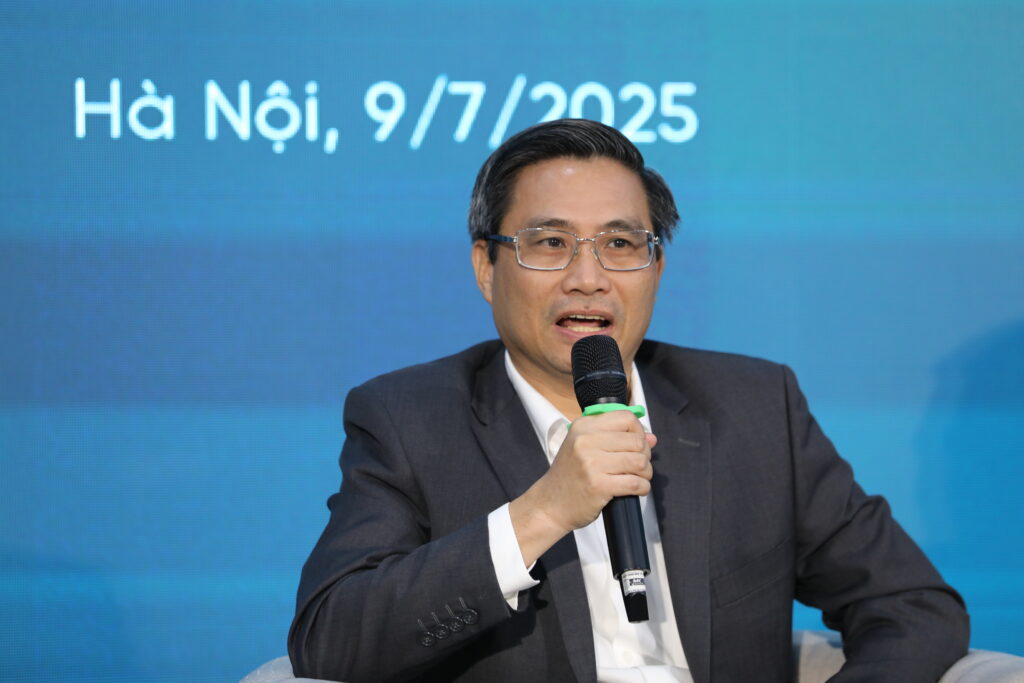
With three decades of experience in Vietnam and currently operating three industrial parks, Mr. Tuan highlighted AMATA’s efforts in developing eco-industrial parks to enhance water recycling rates and improve sustainability metrics.
He also noted that modern industrial parks face increasing pressure from both customers and investors to provide clean energy, low-carbon solutions, and recycled water. Additionally, listed companies must now report sustainability metrics to meet the growing demands of ESG (Environmental, Social, and Governance)-focused investors.
Practical results have already demonstrated the benefits of sustainable and circular economic models. For instance, AMATA Bien Hoa Industrial Park is developing two industrial symbiosis projects, delivering clear environmental and economic advantages while meeting export requirements to stringent markets.
Beyond AMATA City Bien Hoa, AMATA’s key projects—such as Amata City Ha Long and Amata City Long Thanh—are also actively investing in eco-industrial infrastructure and services. Notably, expanding renewable energy sources to supply international investors remains a top priority, reflecting AMATA’s strong commitment to sustainability.
Through relentless efforts, AMATA is setting a new benchmark for eco-friendly industrial operations, serving as a model for sustainable development in Vietnam while extending its influence beyond national borders. These initiatives are helping shape a greener, more sustainable industrial future.