

Inquiries from companies considering expansion into “Amata City Ha Long,” an industrial park located near Ha Long City in Quang Ninh Province in northern Vietnam and invested in by Marubeni, are beginning to return. It has been about one and a half years since Marubeni acquired a 20% stake in the park. Following the U.S. announcement of reciprocal tariffs in April last year, many companies took a wait-and-see approach to investment decisions. However, after the tariff rate was reduced to 20% in July, inquiries from companies considering diversification of production bases away from China and elsewhere have begun increasing again. With shortages of industrial land and rising land prices being pointed out in areas near the capital Hanoi, the park is reportedly being considered as one of the candidate locations in the surrounding northern region.

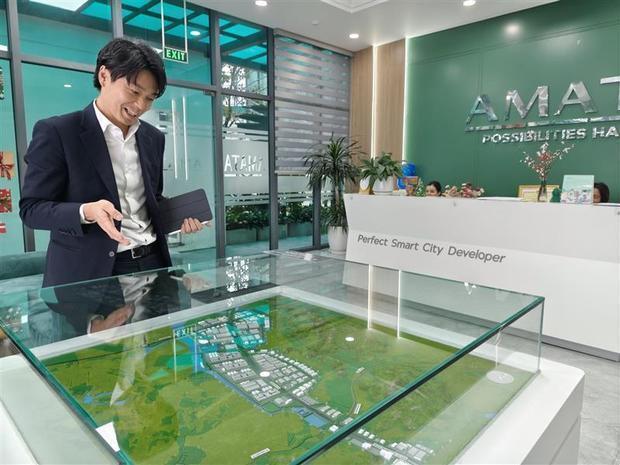
The industrial park is located about two hours from Hanoi by expressway and about 40 minutes by car from Hai Phong, the largest port city in northern Vietnam. It is approximately 160 kilometers from the Chinese border, giving it land access to China. The development area covers about 687 hectares and is being developed in multiple phases.
According to Takeshi Omika, Deputy General Director of Amata City Ha Long JSC, corporate activity temporarily slowed after the announcement of reciprocal tariffs by the Trump administration in the United States. “There was a period when companies were taking a wait-and-see approach because conditions such as tariff rates were unclear,” he said. Recently, however, inquiries have started to increase again, suggesting that some companies are reassessing the allocation of their manufacturing bases.
There are currently around 20 tenant companies in the park, of which about 40% are Japanese companies. Many are manufacturers in sectors such as automotive-related products, machinery, and electronic components. Electronics-related companies from China and Taiwan have also entered the park. The total amount of registered investment by tenant companies exceeds US$3 billion (approximately ¥479 billion).
Differences in Decision-Making with Chinese Companies
Omika noted that Chinese and Taiwanese companies often visit the site and make investment decisions relatively quickly. Japanese companies, by contrast, tend to take more time, as they usually need to go through internal review and formal approval processes at headquarters. Even so, the park continues to engage prospective clients on an ongoing basis. Development of the industrial park is still underway, and undeveloped plots remain available. As a result, even when companies take longer to make decisions, they are less likely to face a situation in which no suitable land is left.
In northern Vietnam, the concentration of manufacturing industries such as electronic components continues to grow, but shortages of industrial land and rising land prices have been pointed out in areas near Hanoi. As a result, interest in surrounding areas such as Hai Phong City and Quang Ninh Province is increasing.
Aeon Mall, the Japanese retail chain, is already operating in Hai Phong City, where many Japanese expatriates live. Ha Long City is also expecting the opening of an Aeon Mall within the year.
High Expectations for Semiconductors
Somhatai Panichewa, Chief Executive Officer of Amata VN, the Thai partner of Marubeni, referred to Vietnam’s potential as an investment destination at a press conference held in Bangkok, Thailand, in June 2024. She expressed the view that if U.S.-China tensions continue, companies may further diversify their production bases.
CEO Somhatai identified electronics, semiconductors, and automotive parts as sectors likely to see increased investment in Vietnam in the future. In semiconductors, as the United States diversifies its procurement sources, countries across Southeast Asia are aiming to move into higher value-added upstream processes.
Infrastructure such as electricity and water has also been developed at the industrial park. It is said to be designed to accommodate industries such as electronic components manufacturing, which require large amounts of power and water.
As changes in the external environment, including U.S.-China relations, continue to affect corporate investment decisions, the focus going forward will be on whether interest in the industrial park translates into actual investment.
|
Company |
Products Manufactured in Vietnam |
|
Tamagawa Seiki |
Sensors for EV drive motors, etc. |
|
Tenma |
Plastic parts related to printers |
|
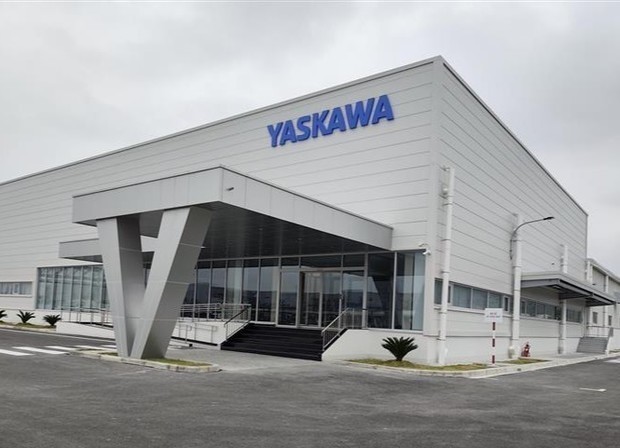
Yaskawa Electric |
Electronic circuit boards for inverters |
|
Fujix |
Wire harnesses (including those for industrial robots) |
|
Parts Seiko |
Metal parts such as shaft holders |
|
Castem |
Cast components for precision equipment |
Source: Compiled by NNA based on company announcements and other sources.
***************************
*This article is published with the permission of NNA (NNA Co., Ltd.), which provides Asian economic and business information.
NNA VIETNAM Co., LTD
URL: http://www.nna.jp/